Being Liked Is Not the Same as Being Respected
A personal reflection on sympathy, gender expectations, emotional responsibility, and why being liked is not the same as being taken seriously.
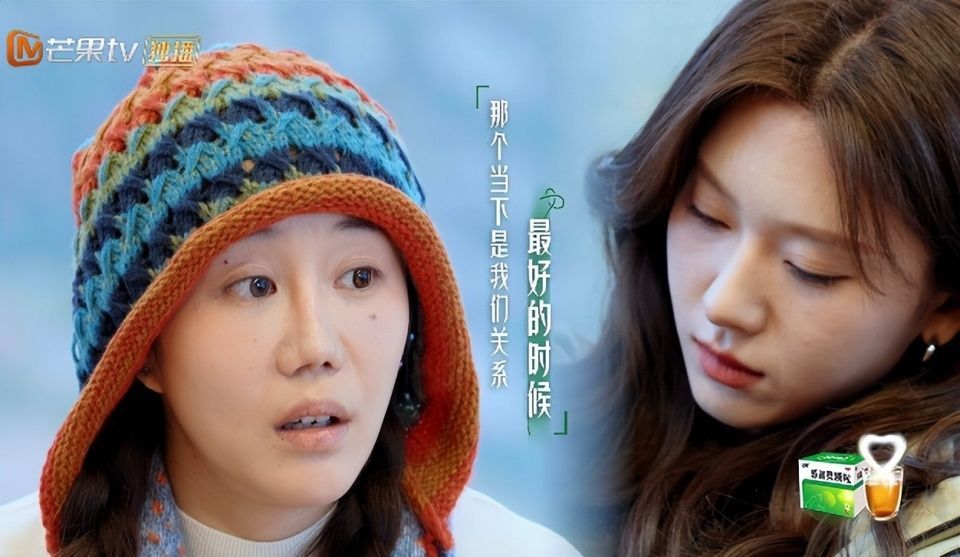
“She’s already crying. Why keep questioning her?” Today, while watching a show about friendships with Taxol, I came across this attitude in some of the comments. I disagree with it. What bothers me is not that someone cried, but that her tears seemed to become a reason to end the discussion. Once one person’s distress became visible, the other person’s need for an explanation and a clear account of what happened was apparently supposed to give way. The person who could still organize her thoughts, remember the details, and explain why she was hurt ended up looking cruel. I find that difficult to accept. Do we have to appear unable to cope before our feelings deserve to be taken seriously?
The two friends on the show had fallen out years earlier over an invitation to write a foreword and a disagreement involving a fee of 30,000 yuan. One was a financially well-off writer; the other was an actress whose financial circumstances were more difficult at the time. When they returned to the incident on the show, their approaches were very different. The writer had prepared an account of what happened, how she felt, and the relevant records, hoping to clarify the issue. The actress repeatedly said she could not remember, resisted continuing the discussion, and eventually cried. Rather than immediately deciding who had been right or wrong all those years ago, I was more interested in something else: why did these different ways of expressing themselves lead some viewers to decide so quickly who deserved sympathy and who deserved criticism?
In some of the comments I read, the writer’s preparation was interpreted as pettiness, her insistence on details as refusing to let things go, and her demand for a response as aggression. But why should being prepared undermine someone’s credibility, or even their right to express dissatisfaction? When something matters to me, I may remember it clearly. I may also prepare because I do not want to find myself struggling to explain it again. Emotional confusion can be genuine, but so can clarity. Not crying does not mean we are not hurt. Being able to explain ourselves certainly does not mean we no longer care. We should not assume that someone owes more concessions simply because she seems better able to manage her pain.
I particularly reject the idea that “she is already so upset” means she no longer needs to respond. Someone’s distress can be a reason to pause a conversation or change how we approach it, but pausing is not cancelling. Her emotions need consideration, and the other person’s questions still exist. If the outcome is always determined by whoever displays pain more visibly, then the person who remains articulate must continually prove that she means no harm. She may even be expected to apologize for raising the issue at all. The discussion stops being about what happened, why someone was hurt, or how the relationship might move forward. It becomes a question of whose pain is easier to see. Emotions deserve to be taken seriously, but they should not have the power to erase another person’s concerns.
I also find it difficult not to connect these judgments with our expectations of women. I cannot help wondering whether a man who brought complete records, clearly explained his position, and insisted on an answer would be more readily described as logical, decisive, and thorough. The same behavior in a woman can become evidence that she is too forceful, calculating, or unforgiving. What I saw in the writer was someone who understood her own feelings and believed she had the right to ask for an explanation. Yet some viewers seemed unwilling to accept this as a legitimate way of expressing hurt. She could be upset, but preferably not too explicit. She could complain, but preferably not insist. She could want to be understood, as long as her needs did not make anyone else uncomfortable.
This makes me wonder whether some people are willing to accept women’s emotions in their full range, or only the emotions that fit their image of a woman. Hurt, tears, and disappointment fit easily into the image of someone who needs protection. Anger, determination, and a refusal to back down can make that image harder to accept. It is as though a woman must first prove herself sufficiently helpless to deserve care. Once she demonstrates an ability to address a problem, she becomes responsible for accommodating everyone else. Nor does this expectation necessarily come only from men. Women can use it to judge other women, or even to judge themselves. We, too, can mistake familiar roles for natural ones and see those who depart from them as unreasonable or unkind.
But I do not believe that protecting a woman without considering the circumstances necessarily means respecting her. “She is already crying, so stop asking her to explain” sounds caring. Yet it can also dismiss her capacity to respond to a problem and face its consequences. We accept her as someone who needs comfort, but stop expecting her to participate as someone capable of judgment. I dislike this kind of protection. It gives unlimited attention to a person’s vulnerability while setting the rest of her aside. To me, respect means taking her feelings seriously, but also taking seriously what she says, what she does, and what she is capable of doing in response.

This brings me to a way of understanding personal worth that can begin much earlier in life. A girl may be told from childhood that the most important thing is to marry a good person and have a stable family. She needs to learn to be considerate, care for others, manage the home, and become someone worth choosing. Within this vision of life, she gains value by making others need her, like her, and want to look after her. Her judgment, interests, and ability to handle problems independently do not receive the same attention. Over time, “How do I want to live?” may become a secondary question, while “How can I make sure I am treated well?” becomes the central one.
I would use a deliberately blunt phrase to describe this position: treating ourselves as objects. An object can be cherished, protected, carefully maintained, and even considered irreplaceable. Its value, however, is still determined by the person who owns it. I do not want to see a person place herself in that position: he chooses me, so I have value; he accommodates me, so I deserve love; if he no longer tolerates all my emotional reactions, I must no longer matter enough. In such a relationship, someone can continually check whether she is cherished without asking whether her judgment, choices, and actions are also respected. She may receive a great deal of affection while having little real say in the direction of her own life.
I am not criticizing marriage, parenting, or caring for a household. Someone who actively chooses that life, accepts its responsibilities, and retains the ability to negotiate, refuse, and change her mind has not necessarily lost her agency. The question is whether these roles have become the only recognized source of her worth, and whether she must keep giving in order to be liked. When giving becomes a transaction, unlimited emotional accommodation can begin to feel like the return she is owed: I have done so much for you, so you should accept everything about me. If you set a boundary, ask me to explain something I have done, or tell me that you are hurt too, I feel that all my contributions have been dismissed. But how much room does that leave for two independent people to exist within the relationship?
I do not know what kind of upbringing either woman on the show had. Their different responses nevertheless made me think about how we learn to handle conflict. If a child’s needs are not taken seriously when she expresses them directly, but tears, helplessness, or making her parents feel sorry for her bring a response, she may gradually associate those expressions with receiving care. When a problem arises, her first thought may not be to explain what she needs, but to make others see how much she is suffering. Conversely, if her opinions can be discussed, if she has opportunities to make decisions and face their consequences, she may be more likely to believe that problems can be addressed through communication and negotiation. This is not a conclusion about either woman’s childhood. It is a question I want to ask: have we actually taught someone how to become her own person, or only how to make others willing to look after her?
That distinction can also enter intimate relationships. We may interpret “my emotions should be accepted” as “everything I do while experiencing those emotions should be accepted,” then interpret any refusal as a lack of love. I disagree. Loving someone can involve patience without requiring us to erase our own feelings. Accepting her distress does not mean we cannot tell her that her behavior has hurt us. When I demand that another person absorb all my reactions without conditions, I may also stop treating them as a complete person. Instead, I turn them into a means of proving that I deserve love. I can need comfort, but comforting me should not be their only function. I want my feelings to be seen, and I also need to acknowledge that mine are not the only feelings in the relationship.
This is why, at least in this conversation, I identify more with the writer’s approach. What I recognize is a sense of agency. She did not place being liked by everyone ahead of addressing the problem, and she did not first try to demonstrate helplessness to establish that her concerns were legitimate. She insisted that the incident had affected her and that she wanted a response. Her financial advantages may give her more resources, but they do not make her feelings within the relationship less worthy of consideration. Being more articulate does not automatically make her the aggressor, either. I do not have to believe she is right about every detail to support her right to seek clarity. Her arguments can be challenged and her evidence checked. “Why are you so prepared?” should not be a reason to dismiss her.
Of course, I am not arguing for a different requirement: that women must always remain calm, articulate, and independent of others to count as people with agency. That would merely replace “you should be vulnerable” with “you must never be vulnerable.” What matters to me is that, whatever emotional state someone is in, she still has a place in expressing her wishes, making choices, and responding to others. She can cry and return to the discussion afterward. She can need help and decide what help to accept. She can struggle to explain herself without losing the right to be heard seriously. Equally, the person who is not crying should not be expected to abandon her concerns simply because she appears more determined.
I want our respect for women to stop depending on whether they present themselves in a way that is easy to like. A woman can be gentle or direct. She can accept care or reject arrangements made for her. She can be dissatisfied and insist that others address that dissatisfaction. What troubles me is the contradiction of celebrating women as deserving to be cherished while refusing to tolerate their expression of needs without first making themselves agreeable. That kind of affection comes with conditions: you may have feelings, but do not make them difficult for us to handle; you may be hurt, but preferably in ways we are willing to comfort.
Returning to “She is already crying. Why keep questioning her?”, I still disagree. We can care about why she is crying and also care about why the other person still needs an answer. Those concerns should not cancel each other out. I do not want to deserve care only when I appear pitiable. Nor do I want someone’s desire to protect me to mean they no longer believe I can face a problem. Being liked matters, of course. But more importantly, when I make a request, express dissatisfaction, make a mistake, or need to take responsibility, I want others to continue treating me as someone with wishes, abilities, and boundaries. I do not just want to be treated well. I want to be taken seriously.